
5 Things Your Teen Should Be Doing on the Cusp of Exam Day
With the bank holiday behind us and exams looming, it’s easy to panic. But the final week isn’t about learning everything new—it’s about “high-yield” revision

When your teen sits down to revise, their instinct is probably to “block” their time: two hours of Biology, followed by two hours of History. It feels organized. It feels productive. But according to cognitive science, it’s actually one of the least efficient ways to learn.
To get the best results, it’s time to stop Blocking and start Interleaving.
In simple terms, interleaving is the practice of mixing up different topics or types of problems within a single study session. Instead of doing 20 Pythagoras questions in a row, a student might do one on Pythagoras, one on Trigonometry, and one on Volume—then repeat.
Most revision is done through ‘Block Practice’. The problem with blocking is that the brain goes onto autopilot. If a student does 10 French verbs in the same tense, the brain stops asking “Which tense do I use?” and just starts repeating the pattern.
Interleaving creates Desirable Difficulty. By switching topics, the brain is forced to constantly restart and ask: “What am I looking at here? Which strategy do I need?”
The Baseball Study
In a famous study, batters practiced hitting three types of pitches. Group A practiced 15 fastballs, then 15 curveballs, then 15 sliders (Blocked). Group B got the same 45 pitches but in a random order (Interleaved).
During practice, Group A looked better. But in the actual game? Group B performed significantly better. Interleaving prepared them for the reality of the game—where you never know what’s coming next.
An exam paper is the ultimate interleaved test. Question 1 might be about 19th-century medicine, while Question 2 jumps to the trenches of WWI. If a student has only ever revised in “blocks,” the “jump” between topics in the exam hall can cause panic. Interleaving trains the brain to make those jumps effortlessly.
The “Three-Subject Sprint”: Instead of a 90-minute block on one topic, break it into three 30-minute chunks of different (but related) subjects.
The Flashcard Shuffle: If they use flashcards, never keep them in neat “Topic” piles. Mix them all up into one giant deck (or even better, sorted into Leitner-style groups).
The “Final 5” Challenge: At the end of a study session, give them five random questions from previous weeks’ topics to keep those neural pathways warm.
Here is the catch: Interleaving feels harder. Your teen might feel like they are “forgetting” more or progressing slower. But that struggle is the sound of their brain actually building long-term muscle. By mixing it up now, they won’t be caught off guard when the exam paper lands on their desk. It’s about training for the “game,” not just the “practice.” Let’s get shuffling!
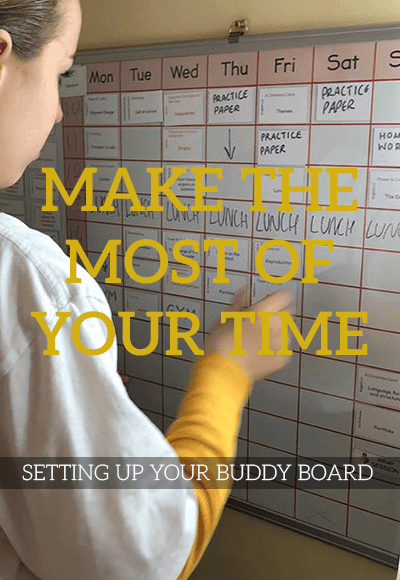
Make the most of the time for revision. Prioritise, monitor and plan straight out of the box.

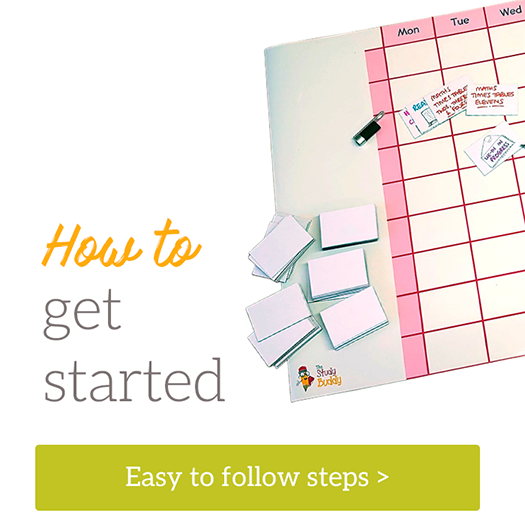
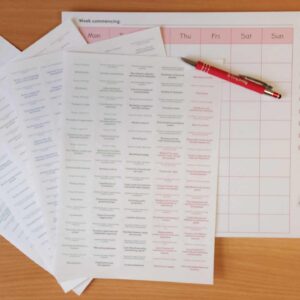
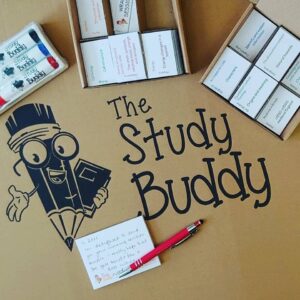
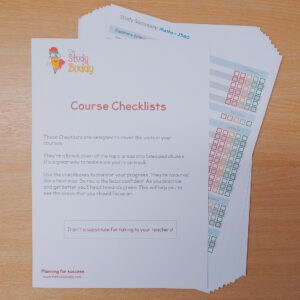
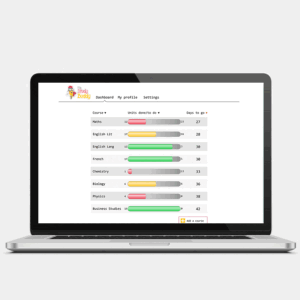
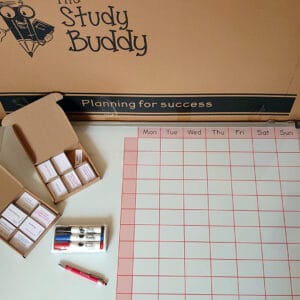
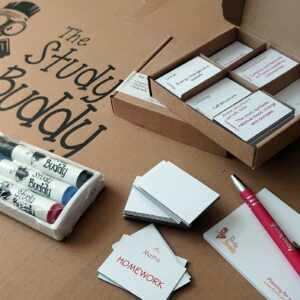
Our GCSE Special bundle is everything you need to get going quickly and easily.
With the bank holiday behind us and exams looming, it’s easy to panic. But the final week isn’t about learning everything new—it’s about “high-yield” revision

Think “blocking” your revision is the best way to learn? Think again. Discover why “Interleaving”—the art of mixing up your study topics—is the scientifically proven
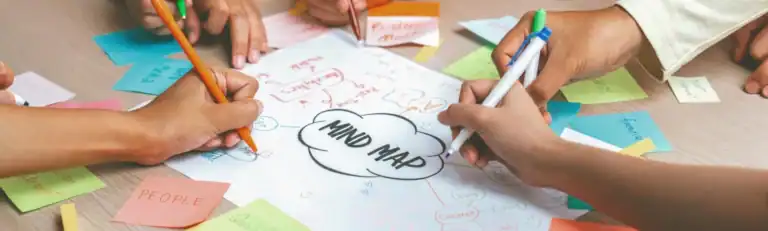
Stop settling for simple spider diagrams. Discover how Concept Mapping and “Linking Words” help students move from memorising facts to understanding complex relationships—the key to
Thank you for signing up! Check your inbox soon for special offers from us.
In the meantime, you can use the code Welcome5
Your basket is saved. Checkout now and we’ll upgrade your dispatch at no extra cost.
Secure guest checkout · Your basket is saved.
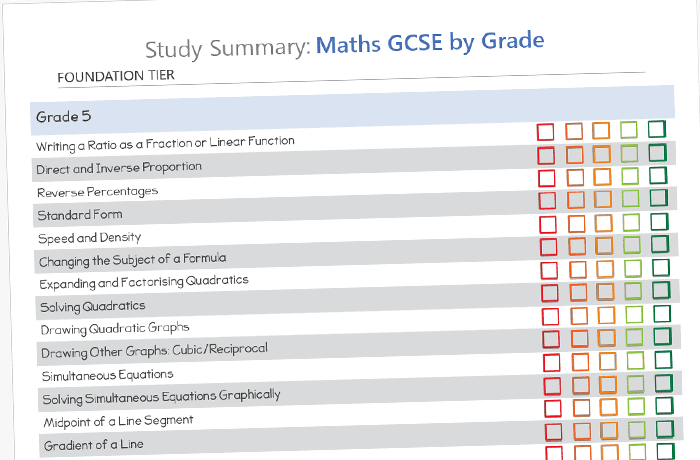
We’ll add your free Maths GCSE By Grade Checklists and keep your revision resources ready for you.
No account is created and you’re not signing up to the newsletter.
Add your email and we’ll send the workbook for free – and keep this basket safely saved for you.
No account is created and you’re not signing up to the newsletter.
An offer code will be sent to you. By subscribing to our newsletter you agree to our Terms and Conditions and Privacy Policy. You can unsubscribe at any time.