
5 Things Your Teen Should Be Doing on the Cusp of Exam Day
With the bank holiday behind us and exams looming, it’s easy to panic. But the final week isn’t about learning everything new—it’s about “high-yield” revision

As exam season approaches, the air fills with a very specific kind of vocabulary. We “hope” for a kind paper. Grandparents send cards with four-leaf clovers. Even schools “wish” Year 11 the best of luck in newsletters. It’s a cultural ritual as old as education itself.
But why, in an environment built on data, marking criteria, and logic, do we still lean so heavily on the concept of luck?
Humans are naturally wired to seek patterns and control. When we face a high-stakes event like an exam, the “unknowns” create anxiety. Wishing someone “good luck” is actually a social tool – it’s a way of acknowledging the pressure and offering support.
Culturally, we see this everywhere:
The UK: We “keep our fingers crossed.”
Germany: They “press their thumbs” (die Daumen drücken).
Solvenia: Would like your axe to land in honey, for a stroke of good fortune. Love this best!
While these gestures are well-meaning, they can subtly suggest that the outcome is out of the student’s hands. If success is down to luck, why bother with the late-night revision sessions?
When we tell a student “Good luck,” we are inadvertently framing the exam as a game of chance—like a roll of the dice or a lottery. For a student already feeling anxious, this can create a sense of learned helplessness.
In psychology, this is known as an External Locus of Control. This is the belief that outcomes are determined by fate, luck, or “the system” rather than our own actions.
External Locus: Believing that outcomes are determined by fate, luck, or “the system.”
Internal Locus: Believing that your own actions and decisions directly influence your results.
When we over-emphasise luck, we push students toward an External Locus. This is dangerous because it breeds passivity. If the paper is “unfair” or the “wrong” topics come up, the student feels like a victim of misfortune rather than someone who could have prepared for a broader range of outcomes.
How do we change this in everyday chat? Here are some “Power Phrases” that replace the traditional luck-based well-wishes. These acknowledge the student’s agency (their power to act) rather than reinforce a reliance on fortune.
| Instead of saying… | Try saying… | Why it works |
| “I hope the right topics come up.” | “I know you’ve covered the bases to handle whatever comes up.” | Shifts focus to their breadth of knowledge. |
| “Good luck on Tuesday!” | “Trust your preparation and your process.” | Reinforces that the work is already done. |
| “I hope you get a kind examiner.” | “Your clarity and structure will make it easy for them to give you marks.” | Positions the student as the one in control of the grader. |
There is a famous quote, often attributed to Thomas Jefferson or Samuel Goldwyn: “The harder I work, the luckier I get.” In the world of revision, “luck” is rarely a random bolt of lightning. Instead, it is when preparation meets opportunity.
Think about it this way: If a student only revises 20% of the syllabus and a question from that section appears, they call it “lucky.” If they revise 100% of the syllabus, they become “invincible.” They haven’t removed the luck; they’ve simply made it impossible for “bad luck” to find a gap.
At The Study Buddy, we don’t really believe in crossing our fingers. We believe in building a framework where luck isn’t required.
Eliminating the “Nasty Surprise”: Luck is often just the absence of a blind spot. By mapping out the whole curriculum, you ensure that no matter what the examiners throw at you, you’ve seen it before.
Controlled Consistency: Working hard isn’t about 12-hour marathons; it’s about the “luck” of being prepared every single day.
Confidence over Chance: When a student enters an exam hall feeling “lucky,” they are anxious. When they enter feeling prepared, they are focused.
So, should we stop saying “Good Luck”? Probably not—it’s a kind gesture. But perhaps we should change what we mean by it.
Next time you wish a student luck, remember that the “luckiest” people in the exam hall are usually the ones who left the least to chance. They didn’t wait for the right questions to appear; they made sure they were ready for any question.
Fortune, as they say, favors the prepared mind.
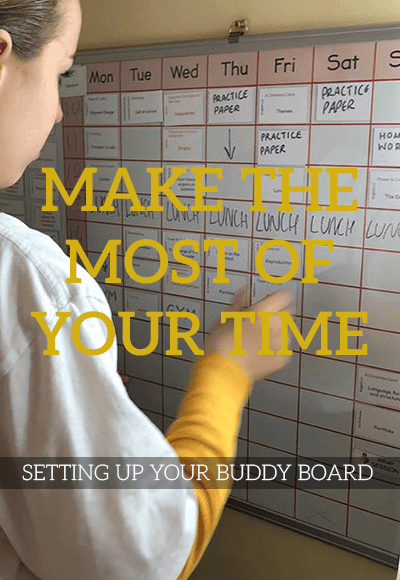
Make the most of the time for revision. Prioritise, monitor and plan straight out of the box.


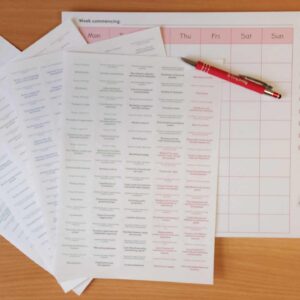
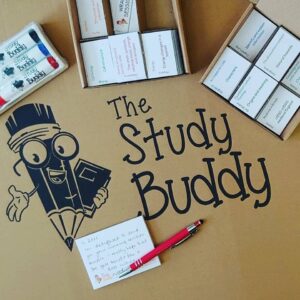
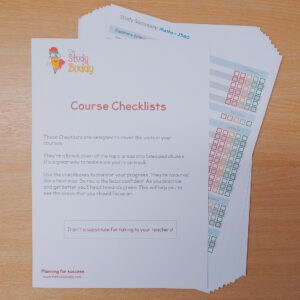
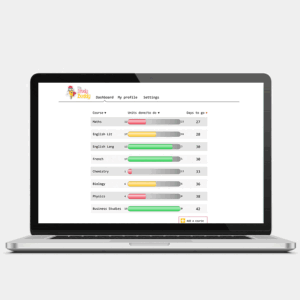
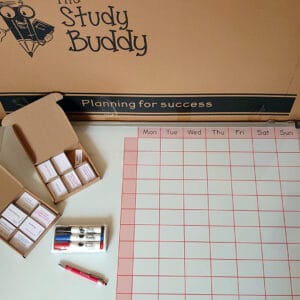
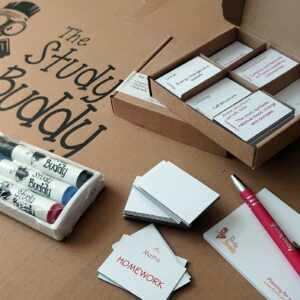
Our GCSE Special bundle is everything you need to get going quickly and easily.
With the bank holiday behind us and exams looming, it’s easy to panic. But the final week isn’t about learning everything new—it’s about “high-yield” revision

Think “blocking” your revision is the best way to learn? Think again. Discover why “Interleaving”—the art of mixing up your study topics—is the scientifically proven
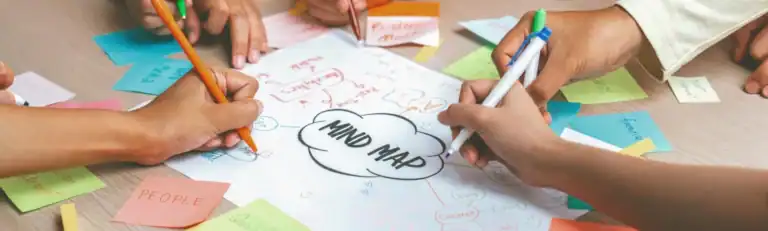
Stop settling for simple spider diagrams. Discover how Concept Mapping and “Linking Words” help students move from memorising facts to understanding complex relationships—the key to
Thank you for signing up! Check your inbox soon for special offers from us.
In the meantime, you can use the code Welcome5
Your basket is saved. Checkout now and we’ll upgrade your dispatch at no extra cost.
Secure guest checkout · Your basket is saved.
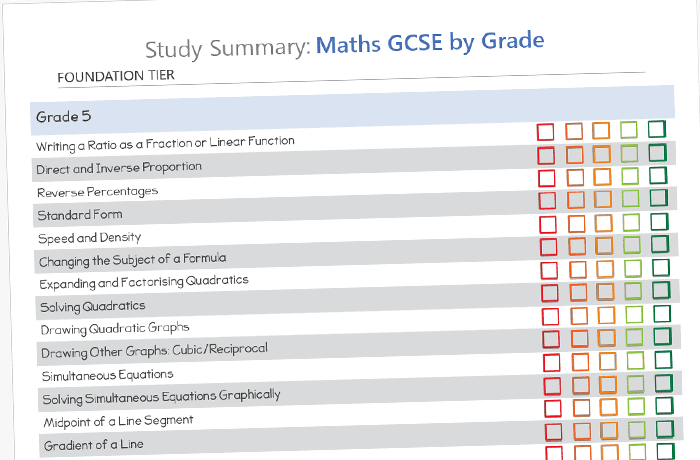
We’ll add your free Maths GCSE By Grade Checklists and keep your revision resources ready for you.
No account is created and you’re not signing up to the newsletter.
Add your email and we’ll send the workbook for free – and keep this basket safely saved for you.
No account is created and you’re not signing up to the newsletter.
An offer code will be sent to you. By subscribing to our newsletter you agree to our Terms and Conditions and Privacy Policy. You can unsubscribe at any time.