
Time Thieves: The Hidden Drains On Your Teen’s Day
Losing track of time, or focus, is a common issue faced by teens when it comes to revision. In this article we look at six

Exam season. The phrase alone can send shivers down a parent’s spine, especially when met with a teenager whose revision efforts are, at best, less than enthusiastic. It’s a common struggle: you want to help, you know they need to revise, but every mention of textbooks or flashcards is met with eye-rolls, grunts, or a disappearing act.
You’re not alone. And the good news; there are ways to approach this that are genuinely helpful, non-patronizing, and far more effective than nagging. Here’s how to go from conflict to collaboration when it comes to revision.
Before you even raise a finger, take a moment to consider why your teen might be reluctant. It’s rarely about laziness – although that’s how it might look. It could be:
Understanding this context will help you approach the conversation with empathy, which is your most powerful tool. You can absolutely do this. No one knows your teenager as well as you do.
Don’t ambush them as they walk in the door or when they’re engrossed in something else. It’s hard when you know what’s best for them, not to leap straight in. Try to find a calm time when you’re both relaxed and not rushed. Maybe over a relaxed dinner, during a car journey, or while doing a chore together. Dr Dom Thompson talks about the Side Chat. Do everything you can to start relaxed and defuse the conversation.
Instead of declarations (“You need to revise!”), try questions that invite discussion:
Crucially, listen without judgment. Let them speak, even if it’s to vent their frustration at something – that may include you! Your job in this phase is to understand, not to fix immediately.
“That actually does sounds really overwhelming,” or “I understand why that subject feels tough.” Acknowledge their perspective before offering solutions. This makes them feel heard and respected, without it being an over-baked sitcom script. Be careful not to over-compensate with your empathy. “I was always rubbish at Maths” might feel supportive but can actually limit their ambition.
4. Collaborate, Don’t Dictate
Instead of creating a revision timetable for them, make sure that they feel an integral part of it.
This fosters a sense of ownership, making them more likely to stick to a plan they helped create.
Shift the conversation away from grades and towards effort and learning.
Sometimes, “help” looks less like words and more like actions:
The biggest barrier is often the perceived mountain of revision. Help them see the small steps that they start with.
Use tools like “traffic light” systems (red for hard, amber for okay, green for easy) to prioritize subjects.
Let them choose when and how they revise, as long as some revision is happening. Some teens thrive late at night, others early morning. Some prefer silence, others background music. Give them space to figure out their own rhythm. The sooner you start the more time there is to figure out what works and what doesn’t.
Revision isn’t a sprint; it’s a jog. Encourage regular breaks, proper sleep, healthy food, and physical activity. A burnt-out brain learns nothing. You can also weave in a sense of reward: “You’ve been working really hard lately, why don’t I make your favourite for dinner.”
Acknowledge any effort, no matter how small. “I noticed you spent a good hour on history today – well done!” This positive reinforcement is far more motivating than criticism. And remember, we’re all about the effort not the grade. Those numbers and letters are the result of putting the work in.
If you have your own projects or learning, let them see you focused and working. It normalizes effort and concentration. Our children might not do what we say, but they will do as we do! Role modelling these good or aspirational behaviours is crucial. You can’t tell a teen off for always being on their phone if you’re scrolling all the time too.
Talking to a reluctant reviser requires patience, empathy, and a willingness to step back from being the “taskmaster.” Your goal isn’t to force them to revise, but to empower them to take responsibility for their own learning, offering a helping hand along the way. Listening, collaborating, and offering practical, non-judgmental support are how you’ll transform exam season from stormy weather to plain sailing.
Sometimes the biggest hurdle is knowing where to start or how to make the material stick. If your teen is feeling overwhelmed or needs proven, structured techniques to make their independent study time count, The Study Buddy is here to help. We create engaging, practical tools designed by teaching experts to help students master effective revision strategies—turning that initial reluctance into confidence.

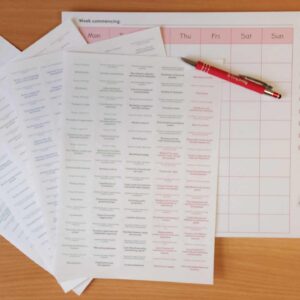
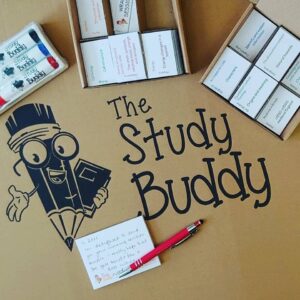
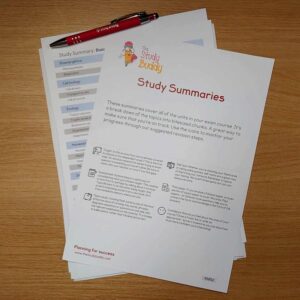
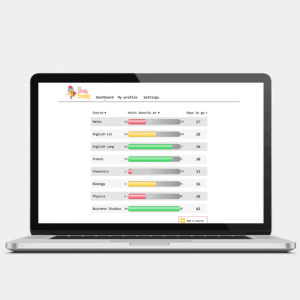


Our GCSE Special bundle is everything you need to get going quickly and easily.
Losing track of time, or focus, is a common issue faced by teens when it comes to revision. In this article we look at six

If you’re using past papers to try and guess what’s coming up in June, you’re practicing “Black Arts,” not revision. Trying to spot patterns in

Happy Pi Day! Beyond the geometry and the actual pie, March 14th is a masterclass in human memory. We’re exploring the science of encoding—the clever
An offer code will be sent to you. By subscribing to our newsletter you agree to our Terms and Conditions and Privacy Policy. You can unsubscribe at any time.
Thank you for signing up! Check your inbox soon for special offers from us.
In the meantime, you can use the code Welcome5