5 Things Your Teen Should Be Doing on the Cusp of Exam Day
With the bank holiday behind us and exams looming, it’s easy to panic. But the final week isn’t about learning everything new—it’s about “high-yield” revision


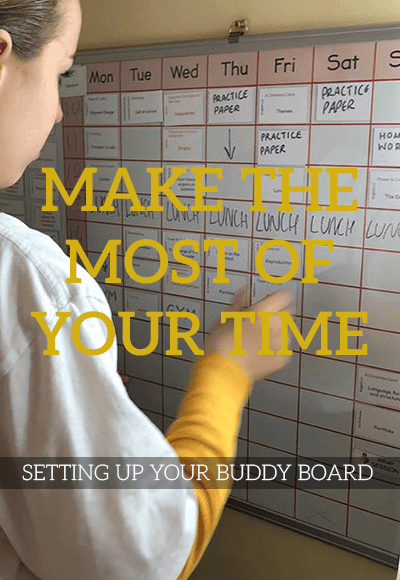
“Let’s make a revision timetable!” It’s the perfect solution for improving grades and reducing stress. Yet, for many teens, the plan quickly falls apart, leading to frustration for both students and parents.
If your child’s study schedule isn’t sticking, it’s not necessarily a sign of laziness or a lack of caring. Often, the plan itself is the problem.
Here are the most common reasons why study plans fail and practical steps you can take to help your teen get back on track.
The Problem: The most common mistake is creating vague entries like “Study Maths” or “Do Homework” for an hour. This lacks a clear objective, making it easy to procrastinate or wander off course.
The Fix: Build A Clear Backlog. Instead of vague subject blocks, encourage your teen to define the exact task or expected outcome for that study session.
| Instead of… | …try |
| Study History (6pm-7pm) | Make flashcards from the class lesson on Origins of WWI |
| Biology Revision | Revise Biology > Cells > Plant vs Animal cells. |
This approach turns a daunting session into a series of achievable micro-tasks. Learn How to Build Your Backlog.
The Problem: Most iterations of a timetable focus firstly – or exclusively – on what work needs to be done. This is often doomed because it’s all pressure and no fun.
The Fix: Build In Balance. When creating a schedule, be flexible – it can and should change every week. A great plan is built by starting with commitments (like school,) then building in social activities (including the weekend lie-in) before allocating time for revision. This keeps the plan about the whole of time. Find out more about this approach.
The Problem: Many teens (and adults!) overestimate how much focused work they can do in a single block. A three-hour study session without breaks is a recipe for burnout and drastically reduced effectiveness.
The Fix: Embrace Short Sprints. Introduce the concept of focused work intervals followed by non-work breaks. The upper limit should really be 45-50 minutes in any one hour. The classic Pomodoro Technique (25 minutes of work, 5 minutes of break) is highly effective. Shorter, more frequent, and more focused sessions are far more valuable than long, distracted ones.
Tip: Breaks should ideally be non-screen time to truly reset the mind—a walk, a snack, or light stretching. But this is also a good time for the most phone-dependent to check on Tik Tok likes.
The Problem: Every student has a peak performance time, yet study plans often squeeze sessions into whatever gaps exist, typically late at night after sports or dinner when concentration is lowest.
The Fix: Work With Their Energy. Help your teen identify their peak energy window (are they a morning person or a night owl?). Reserve this time for the most challenging subjects or tasks that require deep concentration. Lighter tasks (like blurting or making flashcards) can be scheduled for less energetic times.
The Problem: Even the best plan fails if the environment is hectic or chaotic or has something more interesting going on. The single biggest culprit is the always-at-hand smartphone. They destroy concentration and make it impossible to get anywhere near a state of deep flow.
The Fix: Create a ‘Focus Zone’. A functional study plan requires a functional study environment.
The Problem: The plan is treated as a final, unchangeable document. When a student inevitably misses a session or the planned time is insufficient, they feel like they’ve failed and abandon the plan entirely.
The Fix: Plan, Reflect, Adjust. A study plan should be adaptable and flexible. Encourage your teen to:
By moving beyond generic time slots and addressing the underlying issues of focus, time management, and environment, you can help your teen develop a realistic, effective study plan that actually sticks.
The good news is that you don’t need to reinvent the wheel to tackle these study challenges. The Study Buddy provides ready-made tools designed around these very principles of effective learning. Our system quickly helps you and your child define specific goals, implement realistic schedules with built-in breaks. And because our tools are tailored to the exact courses that your teen is taking, you can implement these solutions straight out of the box. You’ll see an immediate difference in their motivation and focus.
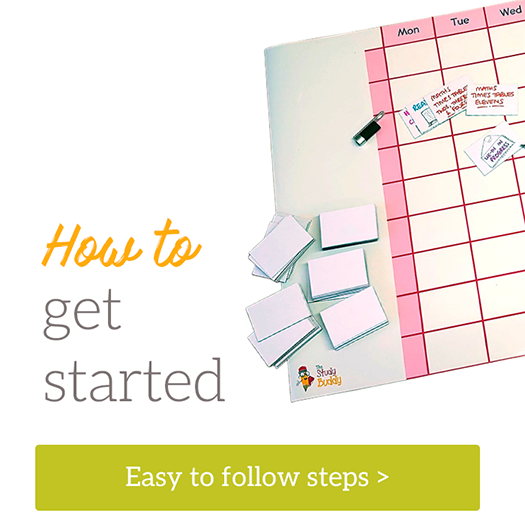
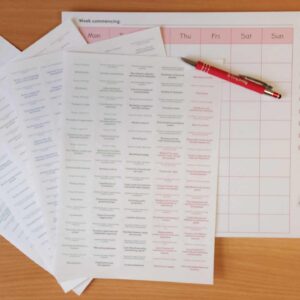
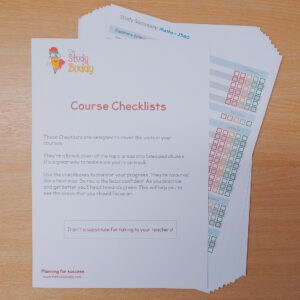
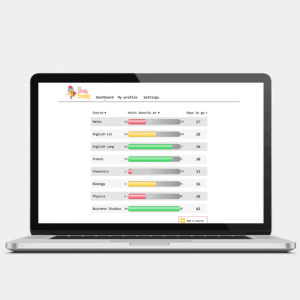
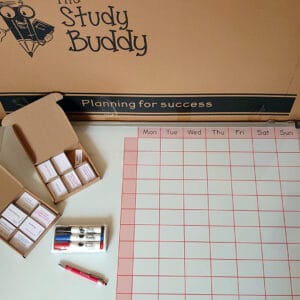

Our GCSE Special bundle is everything you need to get going quickly and easily.
With the bank holiday behind us and exams looming, it’s easy to panic. But the final week isn’t about learning everything new—it’s about “high-yield” revision

Think “blocking” your revision is the best way to learn? Think again. Discover why “Interleaving”—the art of mixing up your study topics—is the scientifically proven

Stop settling for simple spider diagrams. Discover how Concept Mapping and “Linking Words” help students move from memorising facts to understanding complex relationships—the key to
Thank you for signing up! Check your inbox soon for special offers from us.
In the meantime, you can use the code Welcome5
Your basket is saved. Checkout now and we’ll upgrade your dispatch at no extra cost.
Secure guest checkout · Your basket is saved.
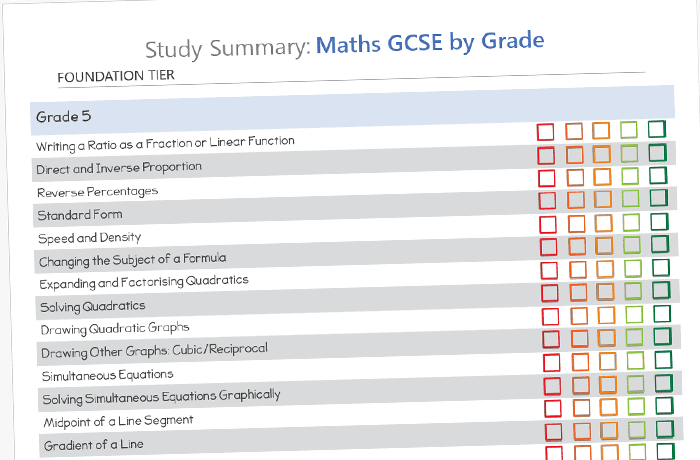
We’ll add your free Maths GCSE By Grade Checklists and keep your revision resources ready for you.
No account is created and you’re not signing up to the newsletter.
Add your email and we’ll send the workbook for free – and keep this basket safely saved for you.
No account is created and you’re not signing up to the newsletter.
An offer code will be sent to you. By subscribing to our newsletter you agree to our Terms and Conditions and Privacy Policy. You can unsubscribe at any time.