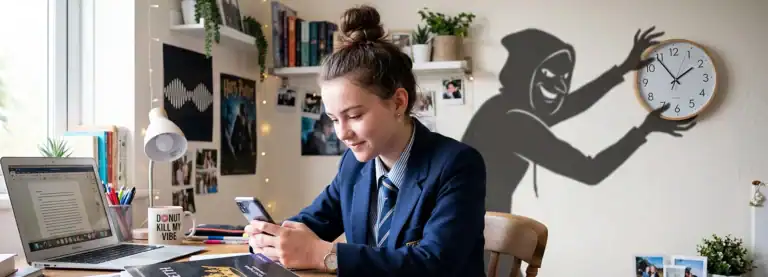
Time Thieves: The Hidden Drains On Your Teen’s Day
Losing track of time, or focus, is a common issue faced by teens when it comes to revision. In this article we look at six
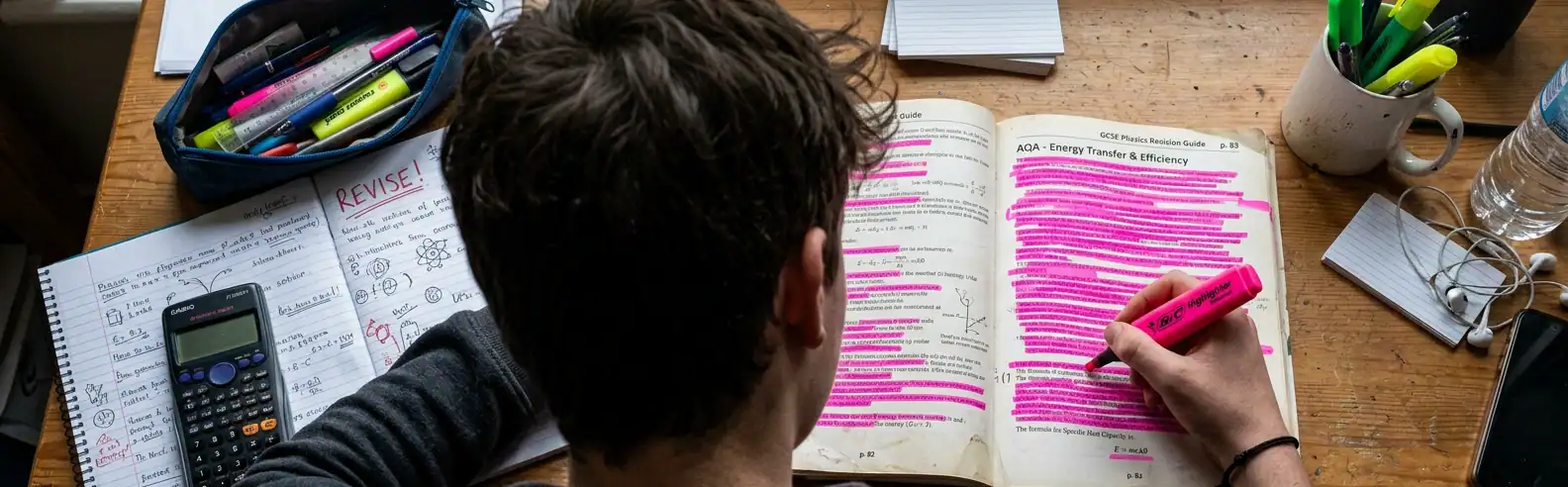
Nervously, you peek into their bedroom, see your teen with an open book, brandishing a highlighter. The neon hue feels like a beacon for the focused. You breathe a sigh of relief. They’re working!
But Dunlosky’s research suggests we might be celebrating too soon.
In 2013, Professor John Dunlosky and his team reviewed a century of learning research. They categorised common study habits into “High,” “Moderate,” and “Low” utility.
The shocker for most parents? The most popular methods – yes, the ones that make a teen look the “busiest” – were ranked at the bottom.
| Technique | Utility | Why it’s a “Busy” Trap |
| Re-reading | Low | It creates “fluency.” They recognise the words, so they think they know the content, but they haven’t processed it. |
| Highlighting | Low | It’s a low-level motor skill. You can highlight a whole page without actually thinking about a single sentence. |
| Summarising from the book | Low | Unless the student is already very skilled, they often just end up copying chunks of text in different handwriting. |
So, why teens come back to these techniques if they’re not actually doing much? Active recall (testing yourself) is hard. It feels “clunky” and exposes what you don’t know. That can make us feel stupid. And we don’t like that. Re-reading feels smooth and successful.
As a parent, it’s easy to accidentally reward the “sitting at the desk” rather than the “wrestling with the topic”.
1. The “Audit” Conversation. Instead of asking “How much did you do?”, try asking: “How much of that time was spent with the book closed?”
2. The “Closed-Book” Rule. Encourage them to use the “Read-Cover-Recite-Check” method.
Action: If they are rereading a chapter, tell them they must spend 5 minutes at the end of every page writing down everything they remember on a blank scrap of paper without looking back.
3. Quality over Quantity. Validate the idea that 30 minutes of “High Utility” work (like practice testing or distributed practice) is worth 2 hours of highlighting.
Action: Give them permission to finish “early” if they can prove they’ve mastered a specific concept through a quick verbal quiz with you.
4. Ditch the “Background Noise”—Reference Dunlosky’s emphasis on focus. YouTube “study beats” are one thing, but a video essay or a show in the background utilises the “Phonological Loop” in the brain, meaning they are literally fighting their own memory to store information.
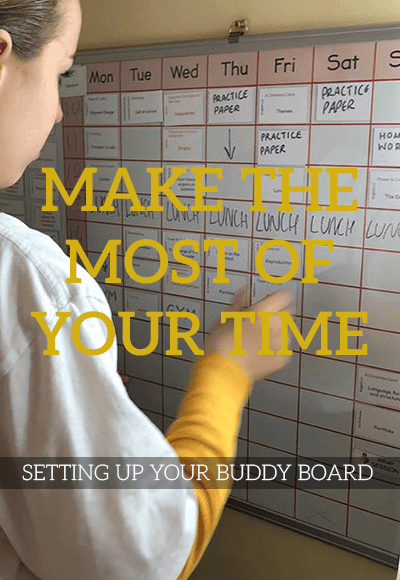
Make the most of the time for revision. Prioritise, monitor and plan straight out of the box.
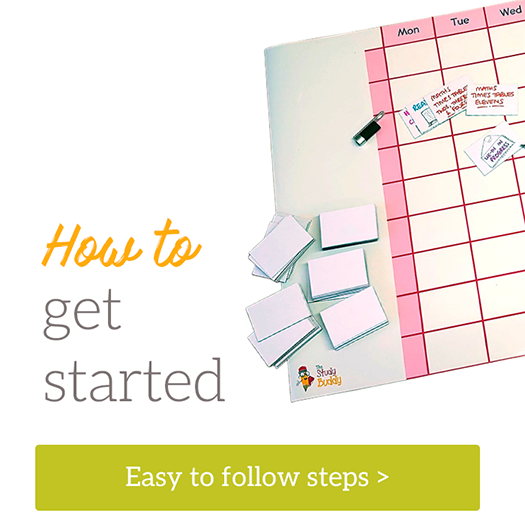
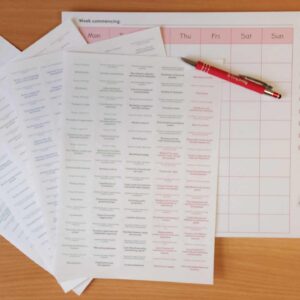
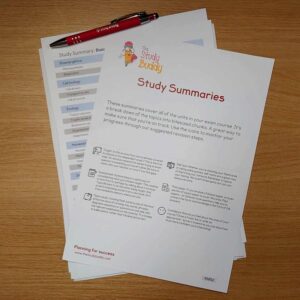
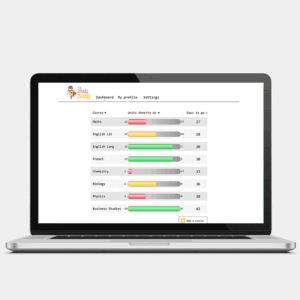
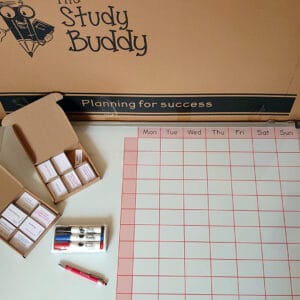
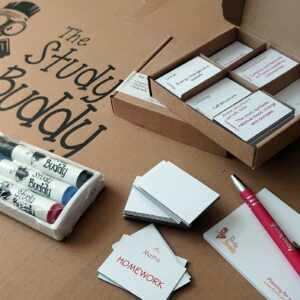
Our GCSE Special bundle is everything you need to get going quickly and easily.
Losing track of time, or focus, is a common issue faced by teens when it comes to revision. In this article we look at six

If you’re using past papers to try and guess what’s coming up in June, you’re practicing “Black Arts,” not revision. Trying to spot patterns in

Happy Pi Day! Beyond the geometry and the actual pie, March 14th is a masterclass in human memory. We’re exploring the science of encoding—the clever
An offer code will be sent to you. By subscribing to our newsletter you agree to our Terms and Conditions and Privacy Policy. You can unsubscribe at any time.
Thank you for signing up! Check your inbox soon for special offers from us.
In the meantime, you can use the code Welcome5