
How to Focus Your Revision Effort
The Easter holidays represent the final “big block” of time before exam season truly begins. But without a plan, those two weeks can quickly disappear

In the world of investing, there is a famous disclaimer: “Past performance is not an indicator of future results.” The same rule applies to using past papers for revision.
Past papers are an invaluable part of a revision strategy. However, many students treat past papers like a weather forecast—if they got a Grade 7 on a paper from 2022, they assume they are “at” a Grade 7 now. But the exam board isn’t going to give you the same paper twice. If you’re only looking at the final mark, you’re missing the point of the exercise.
When you sit down with a past paper, your goal shouldn’t be to “predict” what’s coming up. It should be to build a versatile technique that works regardless of what the paper throws at you.
| Don’t Focus on Content (The Trap) | DO Focus on Technique (The Goal) |
| Memorising specific answers. | Understanding the command verbs (e.g., “Evaluate” vs “Describe”). |
| Checking if you got the right “fact.” | Checking if you followed the mark scheme’s structure. |
| Feeling confident because you like the topic. | Testing your ability to stay calm on a topic you hate. |
| Aiming for a high percentage. | Aiming for perfect time management. |
To get the most out of your practice, stop treating the mark scheme as a “Correct/Incorrect” list. Use it as a blueprint for logic.
The “Command Verb” Audit: Before answering, highlight the instruction. Does it ask you to Explain (the ‘why’) or Identify (the ‘what’)? Many marks are lost not because of a lack of knowledge, but because the student answered a different question than the one asked. Your teachers spend a good amount of time on this. It is worth paying full attention!
Reverse-Engineer the Mark Scheme: After you finish, don’t just count your marks. Look at the “Alternative Answers” or “Guidance” columns. Why did the examiner award a mark for one phrase but not another? What points did you drop – and why? Was it a lack of knowledge (back to the Flash Cards) or understanding (go and talk to your teacher).
The “Blank Page” Stress Test: If a question format looks weird, don’t skip it. These are the most valuable questions because they force you to apply your technique to “new weather.” Practice the process of breaking down a complex prompt into manageable steps.
Content can change. One year might be heavy on organic chemistry; the next might focus on electrolysis. However, the structure of a high-scoring answer remains constant.
If you build a technique that handles time pressure, decodes tricky wording, and hits the specific requirements of the mark scheme, you aren’t just hoping for a “sunny” exam day—you’re prepared for the storm, too.
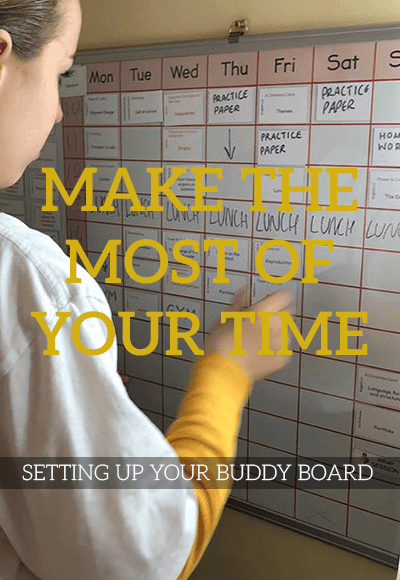
Make the most of the time for revision. Prioritise, monitor and plan straight out of the box.
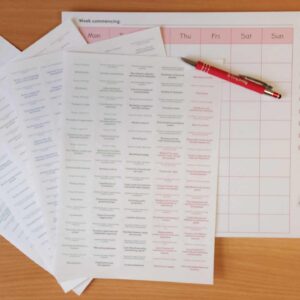
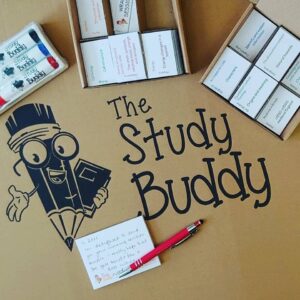
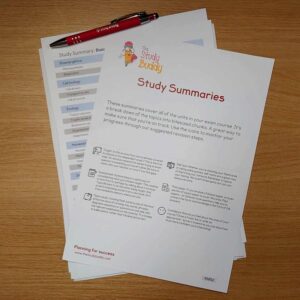
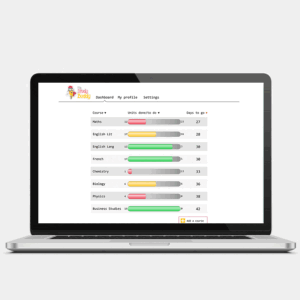
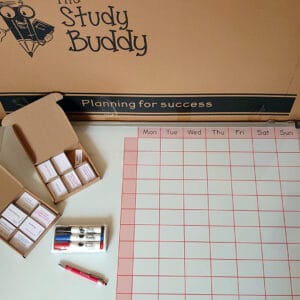

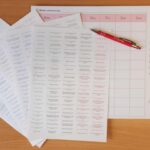
Our GCSE Special bundle is everything you need to get going quickly and easily.
The Easter holidays represent the final “big block” of time before exam season truly begins. But without a plan, those two weeks can quickly disappear

Losing track of time, or focus, is a common issue faced by teens when it comes to revision. In this article we look at six

If you’re using past papers to try and guess what’s coming up in June, you’re practicing “Black Arts,” not revision. Trying to spot patterns in
An offer code will be sent to you. By subscribing to our newsletter you agree to our Terms and Conditions and Privacy Policy. You can unsubscribe at any time.
Thank you for signing up! Check your inbox soon for special offers from us.
In the meantime, you can use the code Welcome5