




Last Year’s Paper Won’t Predict This Year’s Result
If you’re using past papers to try and guess what’s coming up in June, you’re practicing “Black Arts,” not revision. Trying to spot patterns in

Every 14th of March, the math world celebrates Pi Day – the only acceptible time to use US date convention. But for the high-performers and memory athletes, it’s not just about 3.14 it’s a challenge of human capacity. How does someone memorise 100 digits of a non-repeating, infinite number?
It isn’t about “brute force” repetition. It’s about encoding.
At its simplest, π (Pi) is the constant ratio of a circle’s circumference to its diameter. No matter how big or small the circle is—from a wedding ring to a tractor tyre—if you divide the distance around it by the distance across it, you will always get approximately π.
For parents, it’s a nostalgic (or PTSD inducing) throwback to secondary school geometry; for students, it’s a staple of their current Maths curriculum. While you don’t actually need to know 100 digits to calculate the area of a circle (NASA only uses about 15 digits for interplanetary navigation!), memorising it is a spot of fun. It’s less about the maths and more about the encoding – proving that with the right mental hooks, even the most “random” string of data can become unforgettable.
You might have seen the viral videos where Pi is sung to the tune of the Can-Can. This is more than just a novelty; it’s a powerful mnemonic device.
Rhythm and Rhyme: Our brains are wired to remember patterns. By “chunking” digits into rhythmic phrases, we create a structure where the next digit is dictated by the beat.
Emotional Hook: Music engages the limbic system. If a tune is “catchy” (or an earworm), the data attached to it becomes much harder to forget.
Look at a phone number: 07747 467 976. It’s much easier to remember than 07747467976. This is chunking.
When tackling the first 100 digits of Pi, the pros break them into manageable bites—usually groups of 4 or 6.
1415 — 9265 — 3589 — 7932
By focusing on one “chunk” at a time, you prevent cognitive overload.
If music isn’t your thing, memory champions often use the Major System. This technique converts numbers into consonant sounds, which then form words. ‘Simply’ substitute the number with a choice of corresponding letters. You pad out with vowels to make recognisable words, and then build a story.
0 = S, Z, C (Soft C like “Ceiling)
1 = T, D
2 = N
3 = M
4 = R
5 = L
6 = SH, J, CH
7 = K, G, CK, C (Hard C like “Cat”)
8 = F, V
9 = P, B
For example:
Becomes: “A dog sat under a TRee wagging his TaiL eating a BoNe.” That’s 3.141592 sorted!
Whether you’re prepping for GCSEs or just want to impress people at a dinner party, these techniques show that your memory is like a muscle. Encoding isn’t just for Pi; it’s for dates in history, formulas in physics, and vocabulary in a new language. This Pi Day, don’t just eat the circle – master it.
The “Piphilologist”: There is a dedicated name for people who obsessively memorise Pi: Piphilologists. The current world record involves reciting over 70,000 digits—a feat that took nearly 10 hours to complete.
A “Mirror” Mystery: If you look at the number 3.14 in a mirror, it looks remarkably like the word “PIE”. Coincidence? We think not.
The Symbol’s Birthday: While the concept of Pi has been around for thousands of years, the Greek letter π wasn’t used to represent it until 1706 by a Welsh mathematician named William Jones.
No End in Sight: Pi is an irrational number, meaning its decimals never end and never settle into a repeating pattern. It is literally infinite—much like a teen’s appetite for snacks during a revision session!
Make the most of the time for revision. Prioritise, monitor and plan straight out of the box.






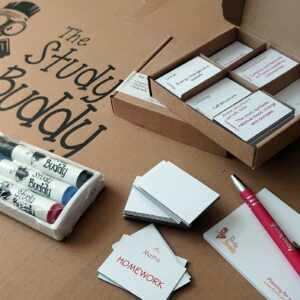
Our GCSE Special bundle is everything you need to get going quickly and easily.
If you’re using past papers to try and guess what’s coming up in June, you’re practicing “Black Arts,” not revision. Trying to spot patterns in

Happy Pi Day! Beyond the geometry and the actual pie, March 14th is a masterclass in human memory. We’re exploring the science of encoding—the clever
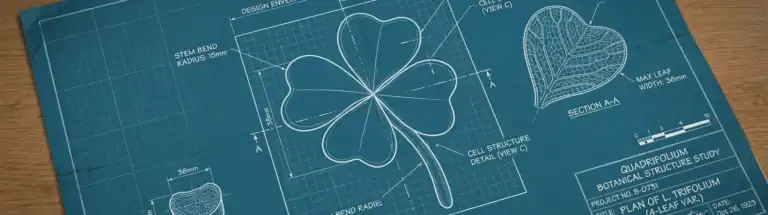
In this follow-up, we’ll dive into the practical side of “making” luck. If Part 1 is about the mindset, Part 2 is about the method.
An offer code will be sent to you. By subscribing to our newsletter you agree to our Terms and Conditions and Privacy Policy. You can unsubscribe at any time.
Thank you for signing up! Check your inbox soon for special offers from us.
In the meantime, you can use the code Welcome5