


Time Thieves: The Hidden Drains On Your Teen’s Day
Losing track of time, or focus, is a common issue faced by teens when it comes to revision. In this article we look at six

We’ve all been there. You wake up on a Monday morning and decide: This is it, I’m going to be healthy. You’ll eat only greens, run 5km, and drink two litres of water. By Wednesday, you miss one workout, feel like a failure, and find yourself face-down in a bag of crisps.
When it comes to exam revision, teens often fall into this same trap. With the “Easter deadline” looming, the temptation is to go “All In” – transitioning from zero hours of work to a rigid, six-hour-a-day schedule.
But is “hard and fast” actually effective, or is “slowly, slowly, catchy monkey” the secret to the finish line?
The “All In” method relies on high-octane motivation. The problem? Motivation is a finite resource. In psychology, this is often linked to “ego depletion“—the idea that willpower is like a muscle that gets tired.
If a teen who hasn’t been studying suddenly tries to follow a gruelling 8:00 AM to 8:00 PM plan, they are likely to encounter the “Stuff That” Effect. This is a documented phenomenon where, once we slip up slightly (like starting 5 minutes late), we feel the whole plan is “ruined” and abandon it entirely for the rest of the day.
So why do we do it? Simply put, it feels proactive and decisive. It might seem like a way to make up for lost time and ensure your teen is “doing enough.“
In contrast, incremental changes—often called Micro-habits—rely on lowering the barrier to entry. If the goal is so small it’s “too easy to fail,” the brain doesn’t trigger its natural resistance to change.
Shahroo Izadi, a leading behavioural change specialist and author of The Kindness Method, argues that lasting change doesn’t come from being a “drill sergeant” to yourself. (Listen to her Study Sessions Episodes) Instead, it comes from:
Self-Compassion: Acknowledging that if you miss a session, you aren’t a “failure.” You just had a bad afternoon.
Evidence-Based Planning: Looking at what has worked in the past rather than imagining a “perfect” version of yourself that doesn’t exist.
“The way you talk to yourself matters“, Izadi suggests. If a parent’s narrative is “You’ve done nothing, so now you must do everything,” it creates a shame-loop that actually prevents the brain from focusing on complex topics like calculus or history.
If your teen has been reluctant up until now, a “Slowly, Slowly” approach doesn’t mean “doing nothing.” It means scaling the ambition to the available energy. Above all, the plan needs to be geared to success. Once the initial motivating ‘ego’ has been spent, it is the feeling of achievement and progress that is going to pick up the slack.
As a parent, your role is not to dictate the pace but to guide and support your teen. Here are some ways to help them find a balance:
Focus on Small Steps: Help your teen set realistic, manageable goals. Applaud the small wins, whether it’s completing a 30-minute revision session or simply making a plan for the week.
Normalise Setbacks: Remind your teen that progress is rarely linear. There will be good days and bad days. Encourage them to reflect on what went wrong, make a new plan, and keep moving forward.
Praise Effort, Not Perfection: Shift the focus from perfect execution to the effort they are putting in. Let them know you’re proud of their attempt to make a change, regardless of the outcome.
Encourage Breaks: Remind them that taking breaks and having downtime are not signs of weakness but are vital to productivity and mental well-being.
Open Communication: Keep the lines of communication open. Ask them how they’re feeling, what challenges they’re facing, and what support they might need from you.
For most teens, “Slowly, slowly” is the winner. By making the changes smaller, we reduce the fear of failure. It’s better to have a teen who successfully completes three 30-minute sessions a day than a teen who plans for six hours but spends the whole day paralysed by the weight of the task.
Kindness isn’t “soft”—it’s a strategy. When we are kind to ourselves, we get back to work faster.
Make the most of the time for revision. Prioritise, monitor and plan straight out of the box.
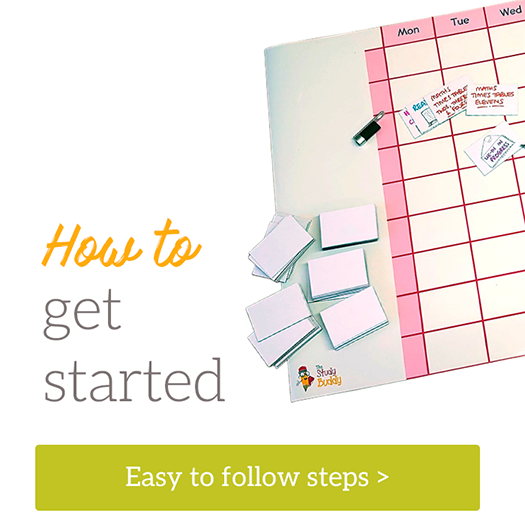
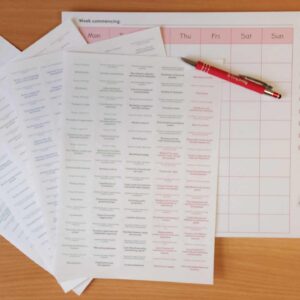
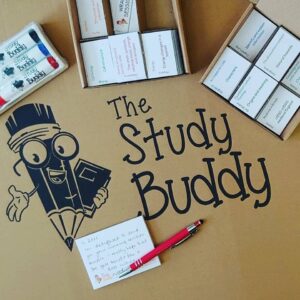
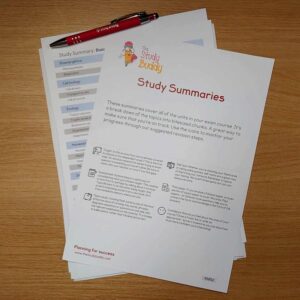
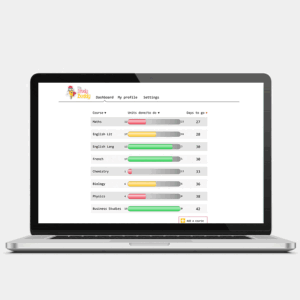
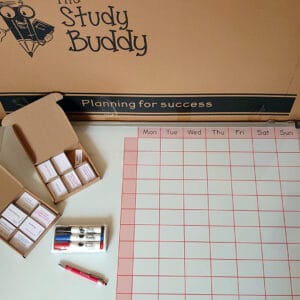

Our GCSE Special bundle is everything you need to get going quickly and easily.
Losing track of time, or focus, is a common issue faced by teens when it comes to revision. In this article we look at six

If you’re using past papers to try and guess what’s coming up in June, you’re practicing “Black Arts,” not revision. Trying to spot patterns in

Happy Pi Day! Beyond the geometry and the actual pie, March 14th is a masterclass in human memory. We’re exploring the science of encoding—the clever
An offer code will be sent to you. By subscribing to our newsletter you agree to our Terms and Conditions and Privacy Policy. You can unsubscribe at any time.
Thank you for signing up! Check your inbox soon for special offers from us.
In the meantime, you can use the code Welcome5