
It's not rocket science.
It's just a really good plan.
You’re doing a great job supporting them. Whether you use a Study Buddy kit or a DIY approach, here is the blueprint for a stress-free exam season.
“This is, without a doubt, the best study support I have ever invested in for our kids!”
Study Buddy It Yourself
Every single successful approach – whether it’s our tried and tested one or your hard-earned creation – is going to centre around these three basic elements.
The “What” Inventory
Don’t guess. Sit down with your teen and list every topic they need to know. Seeing it on paper stops it from feeling like an insurmountable mountain.
How to do it
A great place to start is with your teachers or tutors. They will likely have lists of the topics and areas that have been covered in the GCSE course. You can refer back through class notes – especially if the school uses an online system. Or textbooks, if they still use them.
The course specifications are the definitive source of what will be in the exams. And you can get them freely from the exam board websites. But be warned, they can be a bit much to sift through.
The “When” Strategy
Focus on chunks. Instead of saying “revise for 3 hours,” aim for 40-minute blocks with 10-minute breaks. It keeps the brain sharp and the mood higher.
How to plan
We have found that you should be specific with the study activity (not just ‘Biology’) and also clear about the times. Ambiguity doesn’t help anyone, least of all procrastinating teens!
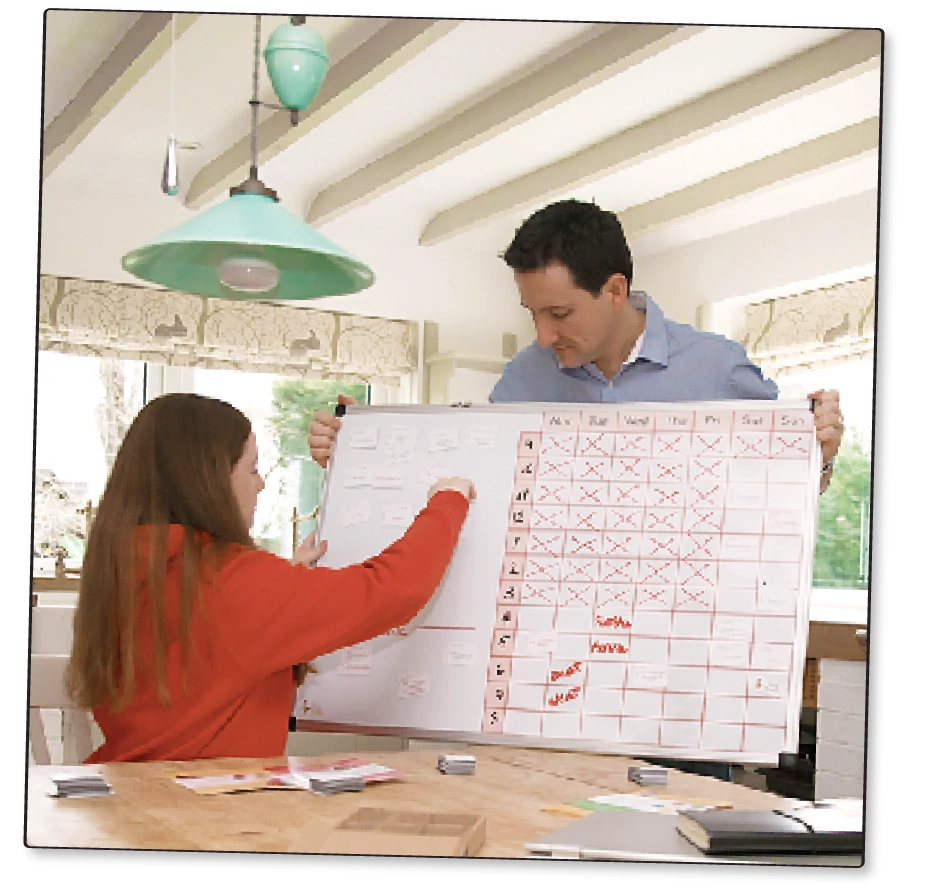
Our planning products are physical. This helps keep everyone on the same page, so to speak. Don’t try to find the one plan for every week; be flexible and reschedule. It’s a much more realistic approach to life.
The “Done” List
Celebrate the wins. Crossing a topic off a list provides a hit of dopamine. It proves progress is happening, even on the days when they feel tired.
Recognise success
A weekly review is a significant win in your approach. There are many benefits to having a regular check-in. Chiefly, your sanity! You can see the plan, and so nagging mid-week isn’t going to do anything. It’s also true that your forced absence will mean your teen will feel more accountability for following the plan.
You’ve just moved from a pressured parent to being a chilled coach!
The ‘What’ Inventory:
List the Topics
The Task: You can’t “revise a subject,” but you can revise a topic.
How to do it: Go through textbooks or exam board specifications and list every sub-topic (e.g., instead of “Biology,” list “Cell Structure” and “Photosynthesis”).
Tip: Be specific. A list of 50 small topics is much less intimidating than one giant, vague subject.
The ‘When’ Strategy:
Making Time
The Task: Be realistic about time. A plan that ignores “real life” will be abandoned by Tuesday.
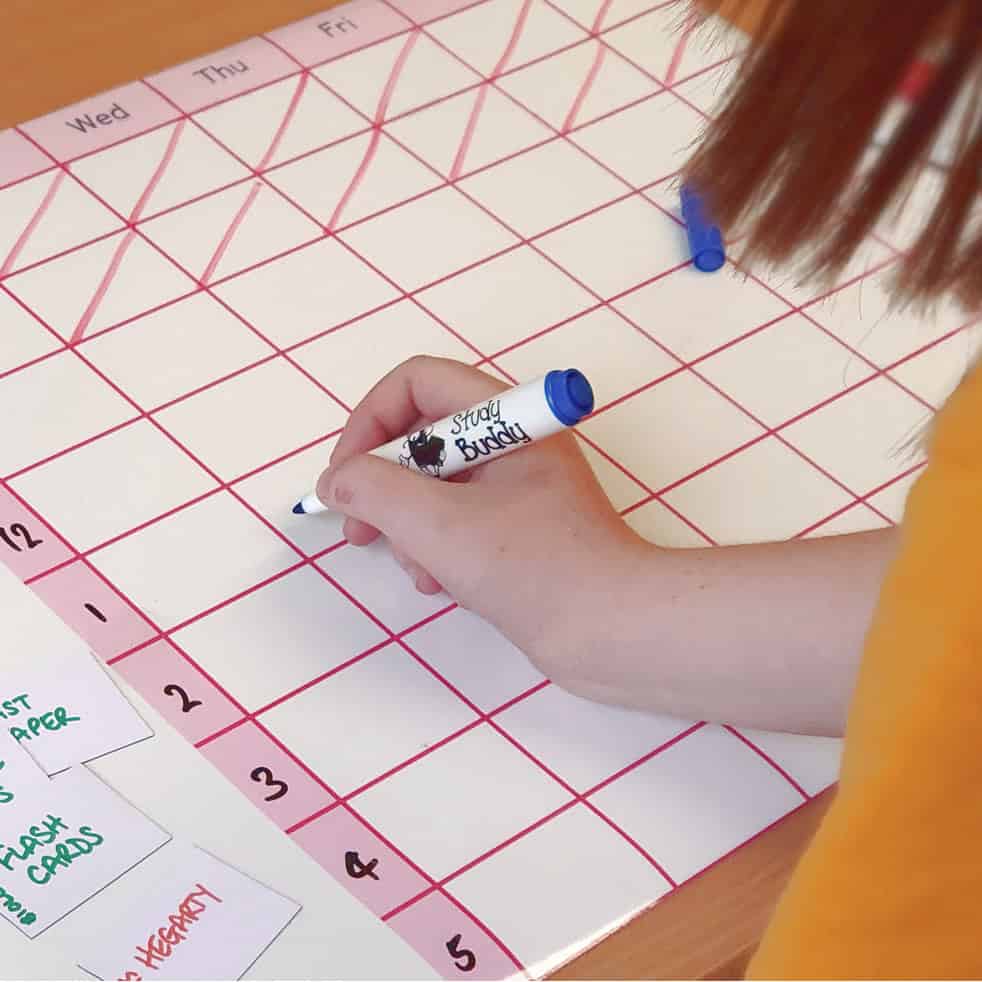
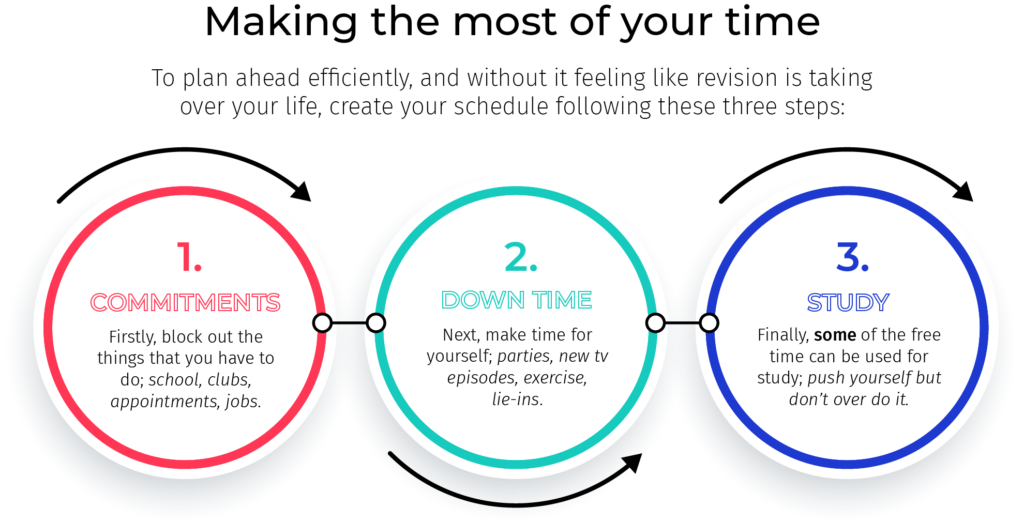
How to do it: Draw a weekly grid. Block out commitments, like school, and then downtime. The gaps that are left are potential revision sessions.
Tip: Stick to 45-minute blocks with 15-minute breaks. It’s the “sweet spot” for maintaining focus.
The ‘Done’ List:
Celebrate the Wins
The Task: Visual proof. You need to see that progress is actually happening to stay motivated.
How to do it: Keep your schedule or topic list visible (on a wall or fridge). As soon as a topic is covered, cross it off. If a session is missed, don’t panic.
Tip: Reward effort and progress not results. It’s more meaningful and motivating.
See this in action with our award-winning tools, loved by hundreds of parents all over the country...
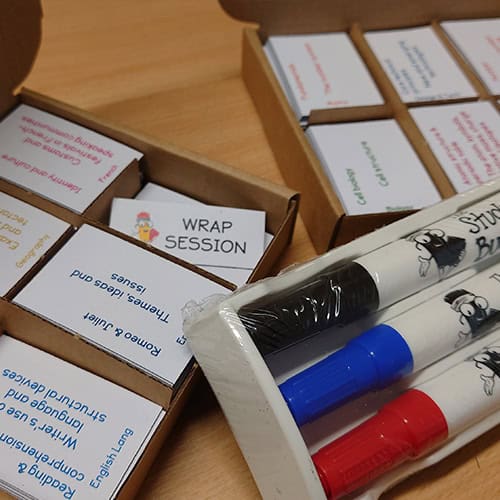
Our kits include pre-formatted topic lists and frameworks. We’ve done the digging so you can start straight away.
I know what I've got to do.
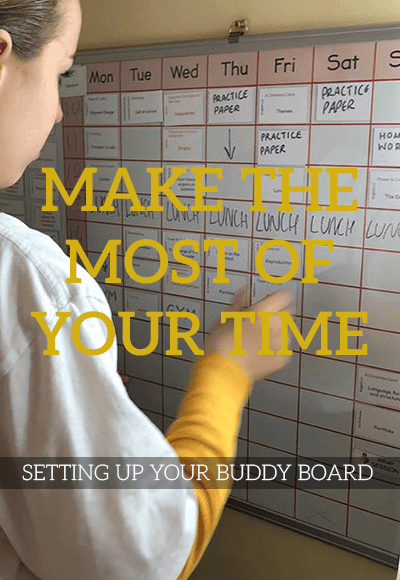
Our visual planners are designed to show “availability” at a glance. No rulers required—just a clear view of where the time actually is.
I know when I'll do it
Our system makes the plan “fluid.” It’s easy to adjust without the whole plan falling apart or becoming a mess of scribbles.
I know I'm progressing
Some free resources to get you going.
-
Checklist Template
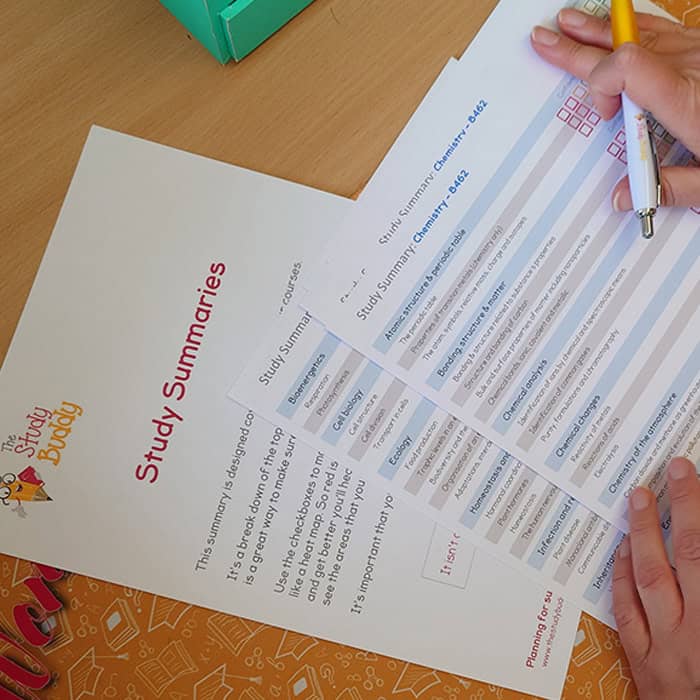
Using our intuitive confidence grading, this blank A4 template will let you record and track your own list of to-do units.
-
Week-to-View Schedule
Forget the ruler and sharpies, this A4 timetable template will let you plan the week ahead.
-
Maths & English Checklists
We've created these FREE checklists for Maths and English Language because they are broadly common to all exam boards. (For your own tailored Course Checklists there is a small cost).
Creating a bite-sized workload
It can be really overwhelming to think about studying a whole subject. If that’s the case, it often feels easier to ignore it or pretend that we’ll come back to it later.
The Study Buddy approach is based on Agile Project Management techniques. This step is all about creating a backlog of work, a master to-do list, if you like.
Getting around the problem of overwhelm is relatively straightforward; you simply need to make the workload feel manageable.
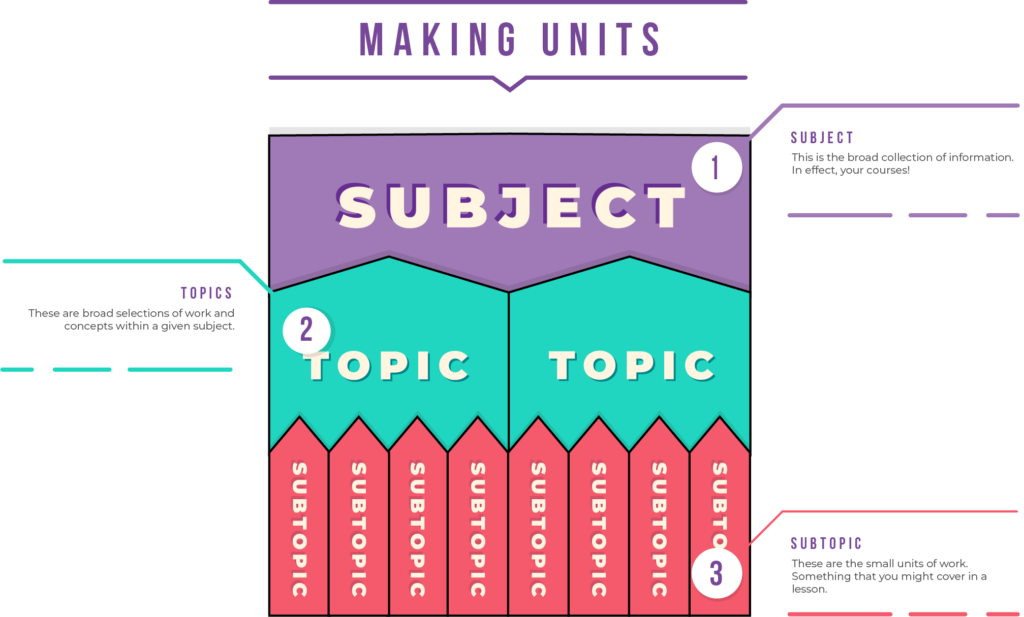
To do that, break down daunting subjects into bite-sized chunks. The sweet spot is finding a level of detail that isn’t too broad but also doesn’t get into content. Ideally, we’re pitching this at something that could be revised in a session.
For example:
SUBJECT (Biology) > TOPIC (Cell Biology) > UNIT (Plant Cells)
Find out more in this article: Building the backlog.
Making your plan
Now you know what needs to be studied, you’re ready to move on to “when”.
It’s easy to create a timetable that works on the idea that you’ll always study a particular subject at a particular time each and every week. But the reality is that life doesn’t tend to work out like that.
Our approach is to treat each week as a new planning exercise. And time management follows three simple steps.
- Block out your commitments
- Make time for yourself
- Allocate some revision
This keeps a balance of ‘social’ and ‘study’ in an easy-to-follow framework.
There are lots of benefits to doing this weekly, not least of all:
- Adapts to changing commitments
- Evolves based on finding what works and what doesn’t
- Gives a sense of control and responsibility
- Provides a reason to chat about progress
Find out more in this article: How To Schedule Time.
CAUTION:
The Following Sections May Accelerate your Progress!
DIY vs DFY (Done For You!)
“The board and the magnets are a really good quality and have made revising much more visual and engaging.”
Louise – mum to teen boy
Build your own
- Less cost but…
- Research can be stressful
- Time-intensive set-up
Our GCSE Revision Bundle
- Tailored to your courses
- Ready to go, right out of the box
- A couple of clicks and done!
- Multiple tried and tested resources
- Support from a friendly team
Are you sure we can't do this for you?
Don't just take our word for it.
Google and Facebook reviews consistently mention how much our tools and approach have helped.
They also talk about how friendly, helpful and supportive we are 🫶
Ready to take your revision planning to the next level?
Order your GCSE Revision Bundle today for fuss-free exam prep. And use HELPFUL10 for a one-time discount across the shop.