Satisfaction As Standard
Rated 5 out of 5

The Study Buddy Resource Hub

Evidence-informed support for every stage of studying

Search practical guidance, revision techniques, wellbeing advice and parent support. Refine by focus, topic, format or downloadable resources.

Clear all
65 resources found
Cognitive science & study strategies

Interleaving: Why Variety is the Secret to Exam Success

Interleaving—mixing topics or problem types within study sessions—creates desirable difficulty that improves long-term retention and exam performance, even though it feels harder during practice.

Explainer (inc cog science)3 min read
Cognitive science & study strategies

Next Level Mind Maps

Concept maps force students to write linking words between ideas, revealing gaps and building deeper relational understanding—making revision more effective than simple spider diagrams. Parents can prompt learning by asking teens to explain how two concepts connect and focus revision on missing links.

Explainer (inc cog science)4 min read
Motivation & habits Download included

Why ‘Study Rituals’ Matters As Much As A Timetable

Short, consistent study rituals (health, environment, focused work) lower the ‘starting cost’ and make regular revision easier; use a simple habit tracker and 25-minute blocks to build momentum and parental support.

Explainer (inc cog science)5 min read
Planning & organisation Download included

How to Focus Your Revision Effort

Use a simple Revision Matrix to prioritise topics by urgency and difficulty, scheduling ‘heavy lifters’ when the brain is freshest and rotating topics as they become easier to boost progress and reduce overwhelm.

Explainer (inc cog science)4 min read
Planning & organisation

Time Thieves: The Hidden Drains On Your Teen’s Day

Identify six common distractions—phone use, perfectionist prep, background multitasking, lack of structure, procrastination, and poor calendar planning—and use simple fixes (phone out of the room, 5‑minute setup, planned ‘missions’, ‘eat the frog’, and schedule around commitments) to make study sessions focused and realistic.

Explainer (inc cog science)6 min read
Exam practice & preparation

Last Year’s Paper Won’t Predict This Year’s Result

Past papers are best used to develop exam technique—decoding command verbs, reverse-engineering mark schemes and practising time management—rather than treating past marks as predictions of future grades.

Explainer (inc cog science)3 min read
Cognitive science & study strategies

Easy as Pi: How Encoding Turns Infinite Digits into Instant Memory

Memorising long, random sequences isn’t about repetition but encoding: use auditory anchors (songs), chunking and the Major System to create memorable hooks for facts, formulas and dates useful across subjects.

Explainer (inc cog science)4 min read
Planning & organisation

How to Manifest Your Own Luck

'Luck' in exams is created by expanding a student’s preparedness across the whole syllabus through consistent study, syllabus mapping and progress tracking — reducing blind spots and anxiety so students enter exams confident rather than hoping for a lucky paper.

Explainer (inc cog science)4 min read
Cognitive science & study strategies Download included

The Illusion of Productivity: Why Your Teen is Busy, But Not Learning

Many common study behaviours that look productive (re-reading, highlighting, copying summaries) are low-utility; parents should prioritise and encourage active-recall strategies, short focused sessions, and asking for closed-book retrieval to measure real learning.

Explainer (inc cog science)3 min read
Motivation & habits

Wishing and Hoping Is Not A Strategy.

Wishing students ‘good luck’ is well-meaning but can encourage an external locus of control; shift language and actions to emphasise agency, consistent preparation and curriculum coverage so luck becomes preparation meeting opportunity.

Explainer (inc cog science)5 min read
Motivation & habits

“Blaze of Glory” or “Slowly, Slowly, Catchy Monkey”?

Small, sustainable revision habits beat last-minute, all-or-nothing ramp-ups; parents should encourage micro-steps, normalise setbacks and praise effort to build lasting momentum.

Explainer (inc cog science)4 min read
Motivation & habits

The Praise Paradox: How Much is Too Much?

Use authentic, process-focused praise (effort, strategies, recovery) rather than empty person-praise or ‘potential’ warnings—this preserves motivation, builds resilience and encourages repeatable study behaviours during the final exam stretch.

Explainer (inc cog science)4 min read

Thank you!

Thank you for signing up! Check your inbox soon for special offers from us.

In the meantime, you can use the code Welcome5 

RESERVED FOR YOU

You're a Click Closer to Organisation

Your basket is saved. Checkout now and we’ll upgrade your dispatch at no extra cost.

Secure guest checkout · Your basket is saved.

BEFORE YOU GO

Save Your Basket - And A FREE Gift.

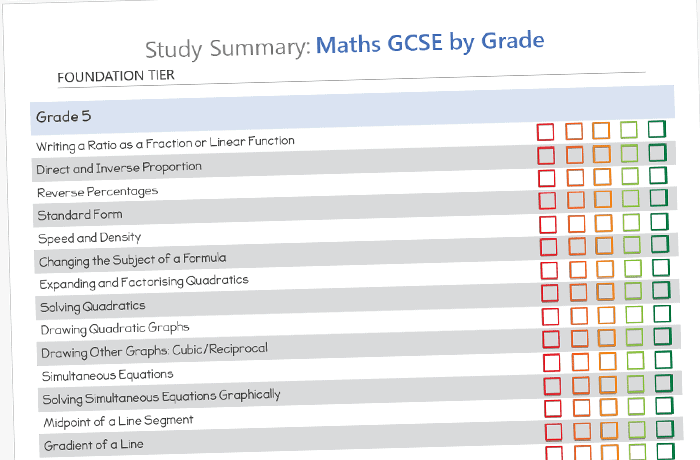
We’ll add your free Maths GCSE By Grade Checklists and keep your revision resources ready for you.

No account is created and you’re not signing up to the newsletter. 

SPECIAL STUDY BONUS

The Student Success Guide

Add your email and we’ll send the workbook for free – and keep this basket safely saved for you.

No account is created and you’re not signing up to the newsletter. 

Inactive

Sign-up!

An offer code will be sent to you. By subscribing to our newsletter you agree to our Terms and Conditions and Privacy Policy. You can unsubscribe at any time. 

0